
7 Things to Check Before Tassie Winter Does the Damage
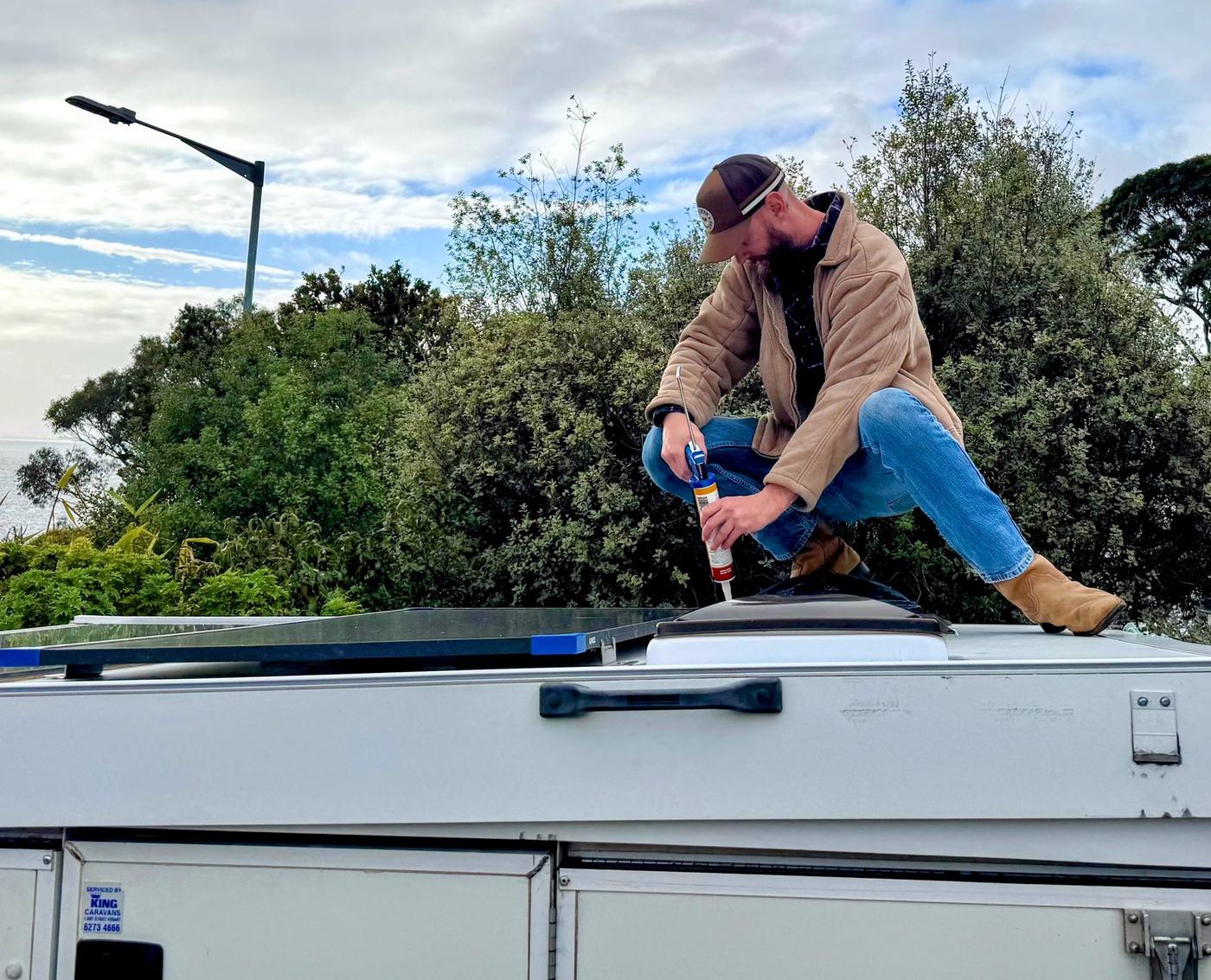
Tasmanian winters are wet, cold and — near the coast — salty. That trio is what quietly destroys caravans between trips: seals let go, bearings pick up moisture, batteries flatten, and by spring you're looking at a repair bill instead of a road trip.
The good news is a solid pre-winter walk-around takes a couple of hours and catches almost everything before it turns into damage. This is the seven-point check I run on my own van every May before it goes into storage.
1. Roof seals, hatches and windows
Cracked sealant is the number-one cause of expensive caravan repairs in Tasmania. Winter rain will find every gap and soak into the timber frame long before you see a stain inside.
Walk the roof and check every seam, hatch, aerial and skylight. Anything cracked, lifting or chalky needs to come off and be resealed properly with a compatible sealant — not smeared over the top.
If you're not confident up there, or you can already see soft spots inside, book a leak detection before winter rather than after.
2. Wheel bearings and brakes
Bearings that sit through a wet Tasmanian winter without being repacked can pick up moisture through worn seals and start pitting. You won't feel it until you're loaded up at 100km/h in September.
If it's been more than 12 months or 10,000–15,000km since your last bearing service, do it now. Same goes for electric brake magnets — corrosion over winter is common on vans parked outside.
3. 12V batteries and solar
Short winter days plus a fridge or alarm draw will flatten a deep-cycle battery in weeks if you leave it. Once a lead-acid or AGM battery drops below about 50% for any length of time, it never fully recovers.
Either disconnect the battery completely, or keep it on a smart trickle charger. If you're relying on solar over winter, clean the panels and check the regulator is actually charging — a shaded panel in July gives you almost nothing.
4. Tyres and handbrake
Vans that sit on the same spot all winter get flat spots and sidewall cracking, especially on cold concrete. Move the van forward or back half a turn every few weeks, or throw a set of blocks under the tyres to take the load off.
Don't leave the handbrake fully applied for months either — shoes and drums can seize. Chock the wheels and release the handbrake if the van is on level ground.
5. Gas bottles, regulators and hoses
Coastal air eats gas fittings. Check bottles, changeover regulators and rubber hoses for rust, perishing or leaking connections — a soapy-water test on the fittings takes two minutes.
Gas alterations are licensed work, so if anything's suspect, don't patch it yourself. Turn the bottles off at the tap when the van's in storage regardless.
6. Ventilation and internal damp
Sealed-up vans full of soft furnishings turn into mould factories over a Tasmanian winter. You want airflow, not condensation trapped against the walls.
Crack a roof vent, leave cupboard doors open, and pull mattresses and cushions off the beds so air can move around them. A small tub of moisture absorber in each end of the van makes a real difference.
7. Chassis, drawbar and underbody
If your last trip was anywhere near the coast — Bruny, the East Coast, down the Channel — the underside is coated in salt. Left over winter it will rust the chassis, brake components and any exposed wiring.
Give the underbody a proper rinse with fresh water, then eyeball the chassis rails, drawbar welds, shackle pins and safety chains. Surface rust caught in May is a wire brush and a can of paint. Ignored, it's a chassis repair.
None of this is glamorous, but working through those seven points before winter is genuinely what separates a van you can hitch up in September from one that costs you a small fortune.
Prefer we do the winter check for you? We'll come to your driveway or storage yard anywhere in Greater Hobart, work through the lot, and hand you a written report. $0 callout, free quote.